Spirituality Mental Health Welcome to Our Mission to Awaken your Christ Energy
Exploring the Influence of Spirituality on Mental Health
OUR MISSION
Where Faith Meets Healing
Spirituality is a deep well upon which many people draw in times of crisis, unrest, or personal challenges. It reinforces inner peace and provides a sense of connection to a force greater than ourselves.
Spirituality can relieve the stress of everyday life, especially when directed with intentional practice:
- Research shows that spirituality can benefit both the mind and the body. Whether someone is coping with cancer or clinical depression, spiritual exercises help them increase acceptance, decrease negative emotions, find meaning, and deepen their relationships with others.
- Spirituality can help address issues such as poor self-esteem, low confidence, lack of self-control, and fear of daily tasks and challenges. For this reason, it can be a helpful extension to mental health treatment plans. It can also simply be a way of keeping mental health strong.
- Even people who do not practice a religion can take comfort in spirituality, since it is a prevalent concept among secular communities. Individuals who have never learned to draw upon spiritual resources can do so quite easily.
Introduction
In an increasingly fast-paced world, more people are seeking ways to maintain their mental health through alternative avenues.
Spirituality, which offers a blend of personal and community support, is emerging as a powerful tool for enhancing mental well-being. This article dives into how various elements of spirituality influence mental health, providing insight into their potential therapeutic benefits and impacts on emotional resilience.
Exploring the Influence of Spirituality on Mental Health:
- Spirituality plays a crucial role in mental health, serving as a source of inner peace and resilience, particularly during personal crises.
- It offers individuals a sense of purpose, thereby enabling better coping strategies against stressors such as illness or emotional challenges.
- Research indicates that people engaging in spiritual practices have reported improved mental well-being, characterized by increased self-esteem and better emotional control.
Have some Questions?
Are Religion and Spirituality the Same Thing?
- “I can embrace spiritual practices that nourish my inner world, while also acknowledging religious symbolism without being bound by religious institutions. I carry both — internally and freely.”
- What Is Spiritual Health?
- Spiritual Psychosis
- Awakening Source Within
Your spirituality is unique
Spiritual practices may seem religious in nature, but they do not have to be.
Religion and Spirituality Are Not the Same — But They Can Coexist Within You
Religion is usually external:
— a structure, a community, a shared belief system
— rituals, doctrines, stories passed down
— something practiced collectively
Spirituality is internal:
— your personal connection to meaning
— your inner relationships with shadow, light, intuition, breath
— the private space where transformation happens
You can hold both without contradiction.
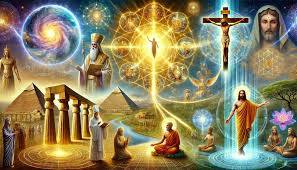
You can appreciate or use the symbols of a religion — Christ, saints, scripture, ancestral rituals, universal archetypes — without needing to commit to the institution, dogma, or cultural expectations that usually come with it.
In essence, spirituality helps us interpret life. From love to hate, birth to death, success to grave injustice, spiritual practices guide us.
Regularly tuning in to the spiritual side can increase spiritual health—and in time, mental wellness, too.
In a world where more and more people are stepping away from strict religious indoctrination,
I find comfort in knowing I am part of a global shift toward inner spirituality. Studies across the last decade consistently show that the fastest-growing group in the United States and many other countries are people who identify as “spiritual but not religious.” This tells me I am not alone in believing that truth lives inside the individual—not in the rules written by institutions. To me, spirituality is a living experience: breath, intuition, energy, healing, and the freedom to explore God on my own terms. Indoctrination demands obedience, but spirituality invites awareness. Indoctrination teaches fear, but spirituality teaches presence. And as millions of people turn inward for meaning, guidance, and connection, it becomes clear that the human spirit is reclaiming itself. My path reflects that same reclamation: honoring tradition when it resonates, releasing what harms, and choosing a relationship with the divine that is internal, sovereign, and free.
As a 2018 study explains, spirituality is a broader term referencing experiences or states of being that envelop a person, whereas spiritual health is something one can cultivate or work toward. Spirituality can take a different form for everyone. Spiritual health can apply to any type of spirituality or religion.
While spirituality is a source of potential that everyone can access if they wish, spiritual health is a spectrum on which everyone falls. Because of this, it is much more concrete.
As the ideas of mental health and spirituality have grown more mainstream, “spiritual health” is a term that crops up more often. Many people mistakenly use it as a synonym for spirituality, but it is actually quite different.
Our Mission
What is Spiritual Psychosis
Spiritual psychosis is a state where intense spiritual experiences lead to psychological distress, confusion, and a disconnection from reality, often involving delusions and hallucinations.
First, the term “spiritual psychosis” is NOT a clinical diagnosis.
Many cultures describe intense spiritual experiences — visions, dreams, symbolic messages, ancestral contact, awakenings — but these alone do not equal psychosis.
People across history (mystics, prophets, healers, artists, trauma survivors) have had experiences that appear unusual but are not pathological.
Clinical psychosis, however, has specific symptoms, patterns, and risks that mental-health professionals are trained to recognize.
The KEY differences: Spiritual Experience vs. Mental Psychosis
A. Control vs. Loss of Control
-
Spiritual experience:
You feel in connection with something larger, but still in your body, still functioning.
You can pause, reflect, and ground yourself. -
Clinical psychosis:
You lose control of thoughts or perceptions.
The experience overpowers you rather than informs you.
Meaning vs. Disorganization
Lizzie's Recovery House breaks it down for you based on:
Spiritual experience:
Has symbolic meaning, coherence, and fits into your identity or belief system.
Clinical psychosis:
Speech, thoughts, or beliefs become disorganized, fragmented, or contradictory.
Enhanced functioning vs. Impaired functioning
Spiritual experience:
Supports growth, clarity, compassion, or insight.
You still manage daily life.
Clinical psychosis:
Disrupts sleep, relationships, safety, work, or self-care.
Ego Strength vs. Ego Breakdown
Spiritual experience:
You still know who you are.
Even powerful visions don’t erase your sense of identity.
Clinical psychosis:
Boundaries between “self” and “other” collapse —
people may believe they are a deity, a persecuted figure, or receiving commands.
Internal Guidance vs. External Commands
-
Spiritual experience:
You may feel guided, supported, or inspired — but you retain choice. -
Clinical psychosis:
Voices or forces feel like they control or command you, sometimes violently or insistently.
In the context of mental health, the Christos Archetype invites us to reconsider the source of our healing: not an authority outside of us, but a consciousness emerging within.
For those, who's histories carry layers of generational trauma, displacement, and spiritual resilience, this archetype becomes a map for psychological liberation.
The Christos Archetype, as used in this blog, is not a religious figure but a psychological framework.
It represents the highest level of internal organization a person can achieve after trauma—an integrated state in which cognition, emotion, and embodied awareness work together instead of in conflict. In clinical language, the Christos Archetype is the part of the psyche capable of self-regulation, ethical decision-making, and compassionate self-witnessing. It emerges when fragmented or wounded parts of the self begin to align, allowing an individual to shift from survival-driven reactions to intentional, values-based action.
Rather than functioning as an external savior, the Christos Archetype describes an internalized pattern of resilience. It is the outcome of reflective practice, inner reconciliation, and the slow development of an adult self that can tolerate distress without collapsing. This archetype integrates principles found in trauma-informed care, DBT, and attachment theory, demonstrating how spiritual symbolism can coexist with evidence-based mental-health concepts to support healing. In this framework, “Christos” becomes a name for the healed and coherent self—a consciousness that rises not through doctrine, but through psychological integration.
This archetype can be viewed as:
- From a developmental standpoint, this archetype can be viewed as the culmination of integrative processes that transform traumatic imprints into sources of resilience and meaning.
- It signifies the movement from survival-based reactivity to intentional, reflective action.
- In this sense, the Christos Archetype is not an external savior figure but an emergent psychological function that supports autonomy, coherence, and self-leadership.
Thus, in a mental-health framework, the Christos Archetype serves as a model of integrated consciousness—one that bridges spiritual symbolism and evidence-based psychological principles to describe the human capacity for healing, individuation, and sustained emotional well-being.
Ready to Transform your Spirituality with Little Effort Using Lizzies Recovery House?
YOU MAY NEED TO KNOW
Frequently Asked Questions
“Ready to awaken your inner Christos with little effort?Lizzie’s Recovery House guides you toward integration, clarity, and peace.”
Program Philosophy: “Healing Through Ease, Not Force”
Lizzie’s Recovery House is built on the belief that transformation does not require punishment, pressure, or perfection. Healing is a natural process the nervous system initiates when it feels supported, seen, and safe.
The program replaces religious indoctrination with:
-
the Christos Archetype (inner integration)
-
trauma-informed practices (safety first)
-
gentle spiritual exploration (no pressure, no dogma)
-
regulation-based healing (breath, pacing, self-observation)
We teach that the divine is not external authority — it is the integrated adult self rising from within.
This allows participants to experience spiritual growth with minimal emotional labor and maximum internal clarity.
The Healing Model: The 4 Pillars
1. Safety & Stabilization
Participants learn to create internal and external safety using:
-
grounding skills
-
boundaries
-
emotional labeling
-
breathwork for regulation
-
harm-reduction mindset
This pillar ensures that the body is no longer in “fight, flight, freeze,” making spiritual healing possible.
2. Self-Observation (Shadow Awareness)
Here we teach that “shadow” is not sin — it is unprocessed pain.
Tools include:
-
reflective journaling
-
IFS-inspired part mapping (Protector, Critic, Child, etc.)
-
compassionate witnessing
-
moment-to-moment awareness
This stage reveals why patterns exist without judgment.
3. Integration (The Christos Archetype)
This is the heart of the program.
The Christos Archetype represents the integrated inner self capable of:
-
regulating emotions
-
choosing wise actions
-
holding compassion
-
forgiving without self-erasing
-
leading one’s life consciously
In practice, participants learn:
-
Wise Mind integration (DBT)
-
self-compassion language
-
values-based decision-making
-
self-leadership
-
trauma narrative reconstruction
The Christos Archetype becomes the internal guide for ongoing recovery.
4. Embodied Transformation
Healing becomes real when it shows up in daily behavior.
Participants practice:
-
mindful communication
-
somatic healing
-
spiritual rituals that regulate (not overwhelm)
-
setting boundaries
-
choosing relationships that match healing
-
practicing consistency instead of intensity
This pillar turns “insight” into “lived change.”
Spiritual Framework: Beyond Indoctrination
Lizzie’s Recovery House replaces religious pressure with:
-
inner spiritual autonomy
-
breath as prayer
-
awareness as communion
-
compassion as ritual
-
transformation as worship
All belief systems are welcome.
No one is required to adopt a doctrine.
We teach spirituality as a natural human function, not a rulebook.
Trauma-Informed Structure
The entire program follows trauma-informed principles:
✔ Safety
No emotional flooding, no forced disclosure, no shame-based tactics.
✔ Choice
Every participant chooses what pace to move at.
✔ Collaboration
Healing is done with participants, not to them.
✔ Empowerment
The Christos Archetype emphasizes internal leadership and self-trust.
✔ Cultural Awareness
Healing honors personal history, identity, and lived experience without imposing narratives.
This ensures that transformation is gentle, sustainable, and empowering.
“I am not rebuilding who I used to be; I am becoming who I was always meant to be.”
Featured Articles
Jennie Jennelle Dec 6, 2025 1:38:40 PM 2 min read
Religion And Spirituality Are Not The Same — But They Can Coexist Within You
Jennie Jennelle Dec 5, 2025 12:21:10 PM 2 min read
Compassion Fatigue Recovery: Reconnecting with Your Inner Strength
Jennie Jennelle Dec 5, 2025 12:14:51 PM 2 min read
Theurgy and Spiritual Alchemy: A Guide to Transformation
Lizzie's Recovery House
.png?width=191&height=191&name=Lizzie%E2%80%99s%20(1).png)